Fifteen months into his mandate, IIAS President Voruganti Srinivas reflects on institutional renewal, the revival of EGPA, the historic audience with Pope Leo XIV, and the priorities guiding the Institute toward its centenary in 2030.
The first 15 months of the Indian Presidency of the International Institute of Administrative Sciences (IIAS) have combined institutional transition, renewed international engagement, major conferences and preparations for the Institute's centenary. Elected in June 2025 as the first IIAS President from the Global South, Voruganti Srinivas has placed institutional unity, global outreach and stronger connections between research and practice at the centre of his mandate.
In this interview, President Srinivas assesses the progress made toward a publications-rich, resource-strong and digitally agile IIAS. He also discusses the reconstruction of EGPA, the private audience with Pope Leo XIV, the International Governance Index and IIAS Legacy Project, and the forthcoming conferences in Athens and Seoul.
In your first interview after taking office, you told us that “the future of IIAS must be built on collaboration without borders, knowledge without boundaries, and governance without exclusion.” Listening to those words today, after more than a year in office, how do they resonate with you? Where can we already see this vision becoming a reality within IIAS, and which part of it still requires the most work?
The past 15 months have been an exceptional period for the International Institute of Administrative Sciences. The Indian Presidency is historic in nature as the first Presidency from the Global South, and we have sought to translate that message into practice.
We have held numerous outreach meetings with members across Asia, Europe, Africa and Latin America. Through these discussions and personal exchanges, I have tried to understand the full range of challenges facing the public administration community. Our relations with the American Society for Public Administration and with IIAS entities and regional groups, including EGPA, IASIA, AGPA and LAGPA, have also been strengthened.
Looking back, I can confidently say that this has been a successful period of outreach and expansion involving public administration scholars, practitioners and publications. The Presidency presented a vision of a publications-rich, resource-strong and digitally agile IIAS, and we have made significant progress on each of those commitments.
Looking back at your first 15 months in office, which achievements are you most proud of, and which one do you believe has had the greatest impact on IIAS and its community?
The Indian Presidency began in June 2025 during an exceptionally difficult institutional transition, particularly because the European Group for Public Administration was experiencing a period of division. The reconstruction of EGPA under President Sabine Kuhlmann, together with Vice Presidents Marco Meneguzzo and Reto Steiner and a 13-member Steering Committee, has been one of our most important achievements.
The reconstruction of the Permanent Study Groups, Ad Hoc Groups and Special Panels was also highly significant. Similarly, the IASIA elections were conducted successfully, and its new President, Professor Liezel Lues, has taken on the responsibility of leading the IASIA forward.
We have also maintained strong exchanges with LAGPA President Edgar Varela Barrios and engaged intensively with our partners at Mexico's National Institute of Public Administration (INAP Mexico). Across the membership, from Japan, China and South Korea to Latin America, the Indian Presidency has supported our partners and sought to resolve institutional and professional challenges in an orderly manner.
One of my personal beliefs is that public administration must serve practitioners and academics, and that research must ultimately serve the wider community. I have therefore also sought to bring principles developed through research and international exchange into daily governance practice.
You made institutional unity and the rebuilding of trust central themes of your presidency. What was the most difficult institutional decision you have faced so far, and what did it teach you about leading an international organization such as IIAS?
Adherence to the rule of law and to the statutes of the International Institute of Administrative Sciences has been particularly important to me. As a career civil servant, I have always believed that public administration must be driven by the foundational principles of the rule of law, constitutional values and ethical principles. Accountability, meritocracy and ethics have guided me throughout my career.
In working to ensure institutional unity and rebuild trust, I have engaged with individual members, national representatives and participants across the General Assembly. Today, IIAS is a cohesive body in which members interact frequently and strong bonds exist across countries.
Institutions must be living organizations. They thrive through constant interaction, workshops, symposia, public engagement and extensive outreach. I believe we have strengthened both institutional unity and trust within the membership through our commitment to the IIAS statutes, democratic values and ethical public administration.
“Institutions must be living organizations. They thrive through constant interaction, public engagement and extensive outreach.”
Rome was your second EGPA Conference as IIAS President. For those who could not join us, how would you describe the atmosphere and significance of EGPA 2026? What made the association's recovery possible, and what lessons can the wider IIAS community draw from the EGPA experience?
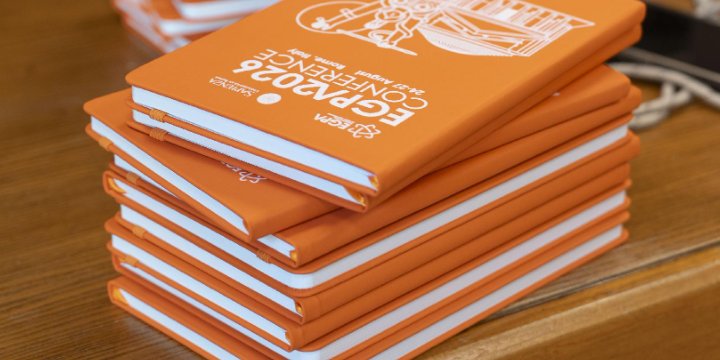
EGPA 2026 was a remarkable success. The leadership of EGPA President Sabine Kuhlmann was widely appreciated, as were the contributions of Conference Chair Marco Meneguzzo and Organizing Committee Chair Noemi Rossi in making the event at Sapienza University of Rome unique and successful. The IIAS Secretariat also contributed significantly to its organization.
The success of the conference was built on hundreds of paper submissions and the participation of colleagues from more than 60 countries. It included the Transatlantic Dialogue, the Euro-Asia Dialogue and the Mediterranean Dialogue, alongside the work of the Permanent Study Groups, Ad Hoc Groups and Special Panels.
One session in which I was particularly interested focused on expanding EGPA membership. The conference gave a tremendous boost to the unification of European public administration, and I am confident that this community will increasingly come together under the EGPA umbrella.
The reconstruction of EGPA shows that an academic community can overcome institutional difficulty through democratic leadership, structured engagement and a renewed focus on its scientific mission. The momentum created in Rome provides a strong foundation for an even broader presence at the 2027 EGPA Conference.
The EGPA Conference was followed by a private audience with Pope Leo XIV at the Vatican. What was that experience like for you personally? What significance do you attach to the Pope's invitation for IIAS to contribute to the humanization of digital technologies and to ensure that they serve life, peace and the common good?
It was a moment of profound reverence and humility. The invitation to a private audience and the apostolic blessing extended to the International Institute of Administrative Sciences were unique. It was only the second meeting between IIAS and His Holiness, the previous one having taken place 71 years earlier.
More than 500 delegates representing a diverse, multicultural, multilingual and multiethnic community participated in the special audience. Yet everyone shared the same deep sense of reverence. Pope Leo XIV gave the delegation considerable time and attention.
In his address, His Holiness emphasized the principles of Magnifica Humanitas and called for technology to retain a human touch. This message resonated strongly with the EGPA Conference theme, “Public Governance for the Common Good,” and with its discussions on the use of artificial intelligence in governance.
In my brief interaction with the Pope, I emphasized citizen-centric governance models that use technology for the wider public good. His message offers an important direction for the work of IIAS: technology and artificial intelligence must remain grounded in humanity and serve life, peace and the common good.
“Technology must retain a human touch and serve the wider public good.”
As you travel and speak about IIAS around the world, what do people most often say or ask you about the Institute? Have any of those reactions surprised you or changed the way you think about how IIAS is perceived internationally?
The New Delhi IIAS Conference 2025 provided enormous momentum to the Indian Presidency of the IIAS and popularized the IIAS in India. Thereafter, the successful organization of two major EGPA conferences has been an important achievement of the Indian Presidency. Glasgow was the largest EGPA Conference in history, and it was followed by an equally successful Conference in Rome. Interest in the forthcoming conferences in Athens and Seoul has also been very strong.
As I interact with academics, scholars and practitioners across the world, I see growing interest in the International Institute of Administrative Sciences. Even in a country of India's size, the number of academics and practitioners interested in IIAS has increased significantly. We have also seen growing interest from journalists, particularly following the audience with Pope Leo XIV.
From the IIAS-DARPG Conference in New Delhi in February 2025 to the events taking place in 2026, the Indian Presidency has received strong support across the international public administration community. That response demonstrates both the continuing relevance of IIAS and the potential to expand its reach further.
IIAS presents itself as a bridge between academic research and public-sector practice. You have spent your career in public administration and have served as Chief Secretary of Rajasthan since November 2025. Can you identify concrete examples in which research and administrative practice have influenced one another?
There is a close relationship between administrative practice and academic research. One example is the policy maxim of “Maximum Governance, Minimum Government,” which emphasizes the use of technology to bring citizens and government closer, empower citizens digitally and develop fully digital public institutions.
This agenda has also stimulated academic interest in how effective public grievance redressal can enhance trust in government. A growing body of work examines the relationship between the quality of grievance redressal and citizens' trust in public institutions.
A second area is deregulation and compliance reduction. The Government of Rajasthan and other Indian states have pursued reforms across a range of priority areas to improve both the ease of doing business and the ease of living. Comparative public administration allows us to examine these reforms alongside experiences from Germany, other European countries and Asian states.
A third example is the documentation of long-term governance visions. The IIAS publication Viksit Bharat@2047: Governance Transformed brings together more than 30 authors in a comprehensive examination of India's aspirations as a developed country by 2047. Such publications make national experience available for international analysis and comparison.
Earlier in your presidency, you highlighted initiatives such as the International Governance Index and the IIAS Legacy Project. Where do these projects stand today, and what concrete value should IIAS members expect from them?
The IIAS Legacy Project will document the major milestones achieved by the Institute during its first century. I have held numerous discussions with leading scholars about how best to document this journey, and a substantial body of historical material is available.
We are working with the IIAS publications leadership and have identified a group of scholars to prepare a Palgrave publication on the Institute's 100-year history. We envisage this as a three-year project culminating in 2030, accompanied by a year-long series of centenary activities. These events should bring together influential figures in the Institute's history, including past presidents and scholars who helped build IIAS into the organization it is today.
The International Governance Index is also progressing. I have discussed the initiative extensively with the Programme and Research Advisory Committee, particularly regarding the availability of comparable global datasets that could be brought together in a unified index. The project will require statistical expertise and dedicated resources, but it is moving forward and was also discussed during the committee meetings in Rome. We look forward to advancing it in the coming months.
The IASIA Conference in Athens is approaching in October, followed by the IIAS Conference in Seoul in November. What should participants expect from these two conferences, and how will they complement one another?
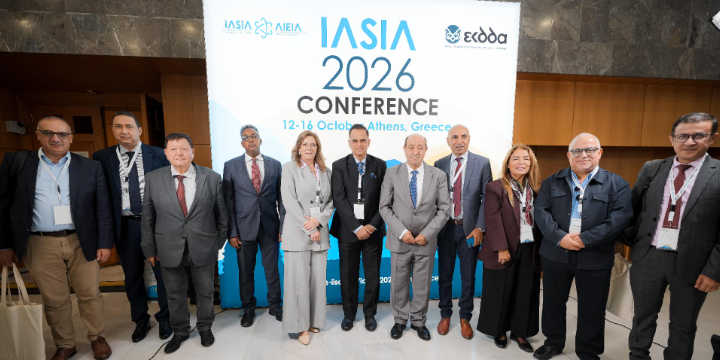
The IASIA Conference in Athens has attracted a very strong response. The program is rich and the organizers are giving close attention to every aspect of the four-day conference. Under the presidency of Professor Liezel Lues, I expect it to be a highly successful gathering for public administration education, training and research.
The IIAS Conference in Seoul will break new ground. IIAS has never before held its main conference in South Korea, and the event represents an important opportunity to engage with the expertise of the Korean public administration community. After the 2025 New Delhi Conference brought IIAS to South Asia, Seoul takes the Institute further into East Asia.
Together with our conferences in Europe and Latin America, Athens and Seoul demonstrate the increasingly global reach of IIAS. The two events will offer different but complementary opportunities for the community to exchange knowledge and shape the next stage of the Institute's work.
Looking ahead to the remainder of your mandate and to the IIAS centenary in 2030, what would you still like to accomplish to consider your presidency successful?
I would like to see an even greater commitment to the public good. This has always inspired me to devote considerable time and energy to ensuring that public administration models succeed in both theory and practice.
During the remainder of the Indian Presidency, we want to engage even more deeply with the membership, expand documentation and exchanges, and bring together schools of public administration, public policy and governance from across the world.
Capacity-building and stronger state capacity will remain major priorities. During my tenure at India's National Centre for Good Governance, we conducted capacity-building programmes for more than 5,200 civil servants from over 40 countries. IIAS has an important role to play in supporting similar exchanges globally.
We will also continue pursuing a publications-rich and digitally agile Institute. The website has been strengthened, media outreach has been updated and the conference calendar is creating new opportunities for scholars from many countries to participate in the IIAS community.
Finally, what is one moment from your presidency that never appeared in an official report or press release, but that you personally will never forget?
There have been several moments in which I experienced the warmth and collegiality of working with a global institution such as IIAS. During my visit to Brussels in June, I had the opportunity to meet the entire Secretariat team. We shared a lunch and exchanged thoughts, and that was a very special moment.
I also remember the EGPA Conference in Glasgow, when you, Diogo, brought chocolates from Brazil and shared them with us. I enjoyed them so much that I took an additional bar. It remains a very happy memory.
IIAS is a close-knit institutional family in which there are many moments of friendship, exchange and collegiality. Not a day passes without interaction with the Secretariat team as we identify new opportunities to involve the membership in the Institute's initiatives.
“Together, we will build a stronger International Institute of Administrative Sciences.”
PROFILE |
|---|
Voruganti Srinivas was elected President of the International Institute of Administrative Sciences on 3 June 2025 for the 2025-2028 term, becoming the first IIAS President from the Global South. He serves as Chief Secretary to the Government of Rajasthan since November 2025. Before assuming the IIAS Presidency, he served two terms as a member of the IIAS Council of Administration and as Vice-Chair of its Finance Committee. As a Senior Administrator and Member of the Indian Administrative Service with 38-years of experience, Srinivas is India’s longest serving Secretary of the Department of Administrative Reforms and Public Grievances and has represented India in several multilateral institutions including the International Monetary Fund, the International Cotton Advisory Committee, the Commonwealth Heads of Public Service and Secretaries to Cabinet. His work has focused particularly on digital governance, administrative reform, grievance redressal, capacity-building and citizen-centric public administration. |

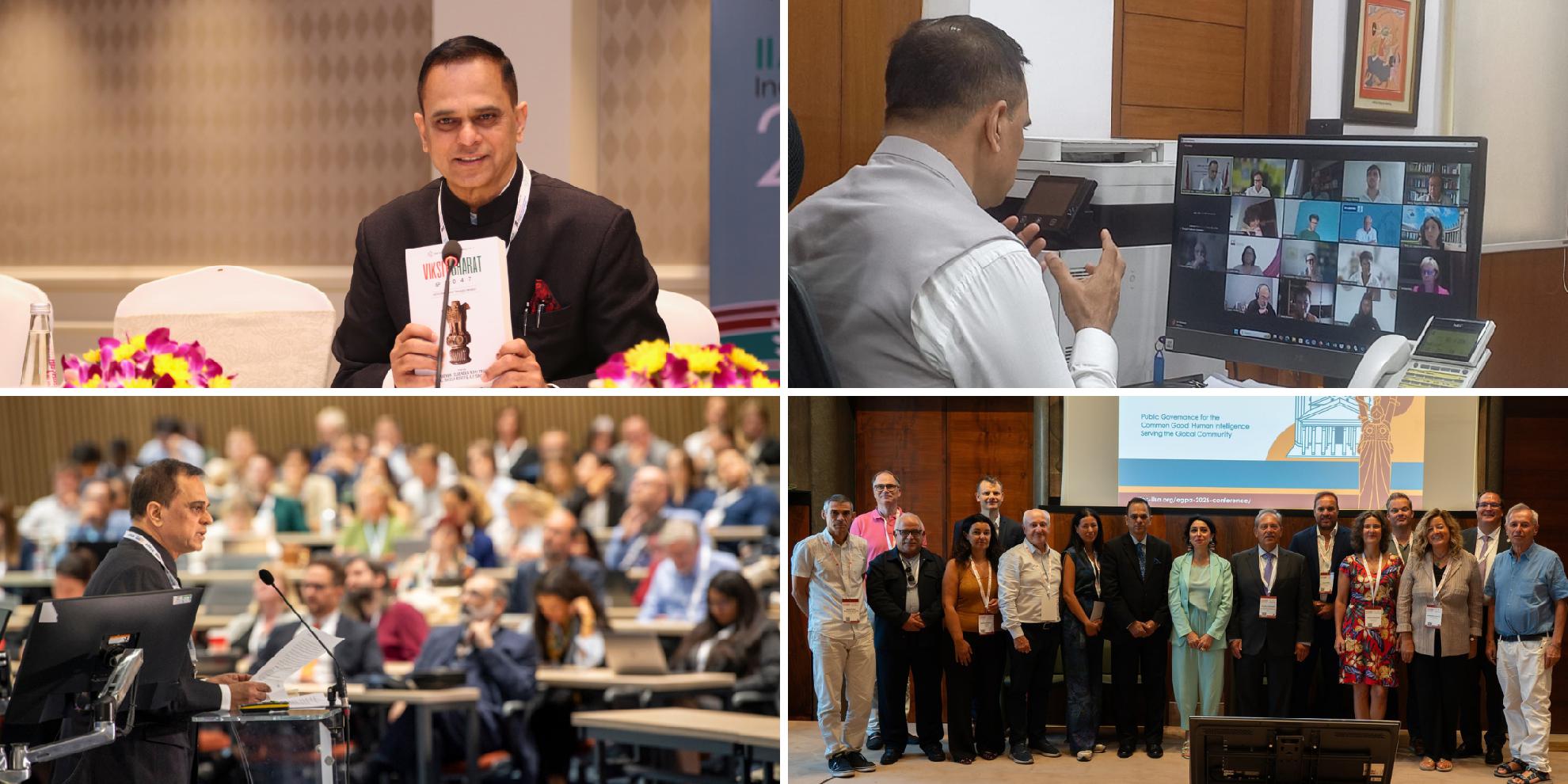
 Watch the full video - IIAS Talks - Interview with Voruganti Srinivas, IIAS President (September 2026) -
Link